
A- Secure the accumulator on the table, remove the bleed plug. Using a spanner wrench (included in our accumulator service kit RMK-100), remove the lock nut and spacer from the top adapter. B- Remove the gas valve guard and jam nut from the bladder stem. C- Push the top adapter with bladder inside the shell.
Contact online >>
Energy storage resources are becoming an increasingly important component of the energy mix as traditional fossil fuel baseload energy resources transition to renewable energy sources. There are currently 23 states, plus the District of Columbia and Puerto Rico, that have 100% clean energy goals in place.
Contact online >>
A hydraulic accumulator is a storage reservoir in which an is held under pressure that is applied by an external . The external source can be an engine, a , a raised , or a compressed . An accumulator enables a hydraulic system to cope with extremes of demand using a less powerful pump, to respond more quickly to a temporary demand, and to smooth out pulsations. It is a type of
Contact online >>
Accumulators are used on (FOT)fixed orifice tube systems. They collect the excess liquid that may leave the evaporator's outlet tube. Compressors are incapable of compressing liquid. The accumulator allows only a fixed amount of oil and liquid refrigerant to enter the compressor for lubrication and cooling.
Contact online >>
When the fluid is pumped into an accumulator the nitrogen (N2) inside the accumulator is compressed. When all the hydraulic fluid is in an accumulator designed for high pressure side of an HHV, the pressure of the nitrogen reaches 5000 pounds per square inch (psi). If empty of fluid, the pressure of the nitrogen is about 2000 psi.
Contact online >>
Accumulator pressure is the hydraulic energy stored in an accumulator, which can be released when needed in various machine systems. The functioning of the accumulator allows energy to be stored during low-demand phases and released during peak demand, thus ensuring a consistent performance throughout operations.
Contact online >>
The pump storage consumption in the country was 1,650, 1,031, and 1,262 GWh, respectively, in 2017, 2018, and 2019. The majority of the Norwegian hydropower stations is a reservoir type, with some run-of-river facilities. There are multiyear reservoirs that can store the normal inflow for more than one year. The largest reservoir is Lake Blåsjø,
Contact online >>
Approximately 16 states have adopted some form of energy storage policy, which broadly fall into the following categories: procurement targets, regulatory adaption, demonstration programs, financial incentives, and consumer protections. [7] Below we give an overview of each of these energy storage policy categories.
Contact online >>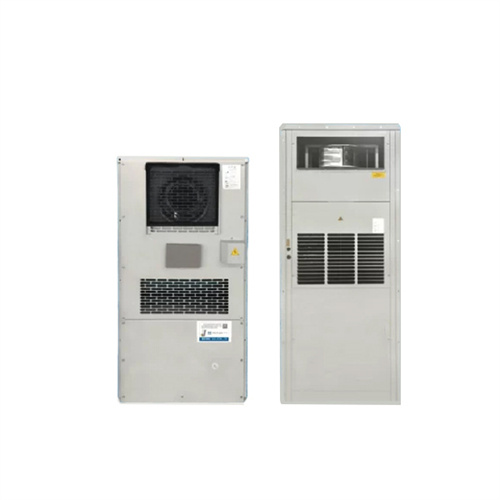
A code repository is necessary to increase awareness and improve safety in the energy storage industry. Electrochemical energy storage has a reputation for concerns regarding the ventilation of hazardous gases, poor reliability, short product life, substantial cooling requirements, and high levels of periodic maintenance.
Contact online >>
The scope of INES includes all the major components of Iraq’s energy sector: upstream and downstream oil, natural gas, power, and linked industries. The recommendations presented reflect the economic interdependency of these components and their collective impact on Iraq’s socio-economic and environmental welfare.
Contact online >>
Today, PJM, CAISO, MISO, NYISO, and NE-ISO have implemented Order 755 and offer new tariff-for-regulation services based on pay-for-performance principles. Furthermore, FERC Order 784, which was issued in July 2013, requires transmission providers to consider speed and accuracy in determining the requirements for ancillary services.
Contact online >>
A step-by-step guide to installing a hydraulic accumulator in your system – everything you need to knowStep 1: Prepare the Necessary Tools Before you set up the hydraulic accumulator, you will need to ensure you have the necessary tools on hand. Here is a list of tools you will need to install, mount, and set up the hydraulic accumulator: . Step 2: Choose the Location for Installation . Step 3: Inspect the Hydraulic System
Contact online >>
A hydraulic accumulator is a storage reservoir in which an is held under pressure that is applied by an external . The external source can be an engine, a , a raised , or a compressed . An accumulator enables a hydraulic system to cope with extremes of demand using a less powerful pump, to respond more quickly to a temporary demand, and to smooth out pulsations. It is a type of
Contact online >>
A hydraulic accumulator is a storage reservoir in which an is held under pressure that is applied by an external . The external source can be an engine, a , a raised , or a compressed . An accumulator enables a hydraulic system to cope with extremes of demand using a less powerful pump, to respond more quickly to a temporary demand, and to smooth out pulsations. It is a type of
Contact online >>
Accumulators come in many different sizes and designs to store hydraulic fluid under pressure. Its initial gas pressure is called the “precharge pressure.” When the system pressure exceeds the precharge pressure, the nitrogen gas is squeezed, compresses and decreases in volume, letting hydraulic fluid into the accumulator.
Contact online >>
A servo hydraulic system accumulator has the following functions12:Supplementing pump flow: It stores potential energy during idle periods and transfers it back to the system during peak power demands.Separating hydraulic fluid from compressed gas: Typically, a bladder inside the accumulator prevents mixing of hydraulic fluid and compressed gas.
Contact online >>
A hydraulic accumulator is a storage reservoir in which an is held under pressure that is applied by an external . The external source can be an engine, a , a raised , or a compressed . An accumulator enables a hydraulic system to cope with extremes of demand using a less powerful pump, to respond more quickly to a temporary demand, and to smooth out pulsations. It is a type of
Contact online >>
A hydraulic accumulator is a storage reservoir in which an is held under pressure that is applied by an external . The external source can be an engine, a , a raised , or a compressed . An accumulator enables a hydraulic system to cope with extremes of demand using a less powerful pump, to respond more quickly to a temporary demand, and to smooth out pulsations. It is a type of
Contact online >>
A hydraulic accumulator is a storage reservoir in which an is held under pressure that is applied by an external . The external source can be an engine, a , a raised , or a compressed . An accumulator enables a hydraulic system to cope with extremes of demand using a less powerful pump, to respond more quickly to a temporary demand, and to smooth out pulsations. It is a type of
Contact online >>
A hydraulic accumulator is a storage reservoir in which an is held under pressure that is applied by an external . The external source can be an engine, a , a raised , or a compressed . An accumulator enables a hydraulic system to cope with extremes of demand using a less powerful pump, to respond more quickly to a temporary demand, and to smooth out pulsations. It is a type of
Contact online >>Enter your inquiry details, We will reply you in 24 hours.

