
Energy storage has emerged as an integral component a resilient and efficient of electric grid, with a diverse array of applications. The widespread deployment of energy storage requires confidence across stakeholder groups (e.g., manufacturers, regulators, insurers, and consumers) in the safety and reliability of the technology.
Contact online >>
Mitigation measures and best practices for battery systemsBuild awareness of battery safety . Ensure the proper design and manufacturing of battery systems . Install adequate ventilation . Implement thermal management . Physical isolation and separation . Implement a battery management system . Detection and isolation . Fire suppression and explosion protection . 更多项目
Contact online >>
Energy storage facilities are monitored 24/7 by trained personnel prepared to maintain safety and respond to emergency events. Facilities use multiple strategies to maintain safety, including using established safety equipment and techniques to ensure that operation of the battery systems are conducted safely.
Contact online >>
A minimum spacing of 3 feet is required between ESS units unless 9540A testing allows for closer spacing. ESS location requirements are detailed for areas including garages, accessory structures, utility closets, and outdoors. ESS installed outdoors may not be within 3-feet of doors and windows.
Contact online >>
Proper thermal management is essential to maintain performance, extend lifespan, and ensure safety. Overheating during charging and discharging can cause accelerated aging, capacity loss, and potentially dangerous thermal runaway events. Developing effective thermal management systems is critical to maximize LIBs' potential.
Contact online >>
Guidance for an objective evaluation of lithium-based energy storage technologies by a potential user for any stationary application. To be used in conjunction with IEEE Std 1679-2010, IEEE Recommended Practice for the Characterization and Evaluation of Emerging Energy Storage Technologies in Stationary Applications.
Contact online >>
At present, the global energy storage market is experiencing rapid growth, with China, Europe, and the United States emerging as key players, collectively contributing over 80% of the newly installed capacity. This trend is expected to persist, setting the stage for a sustained and robust competition in the industry.
Contact online >>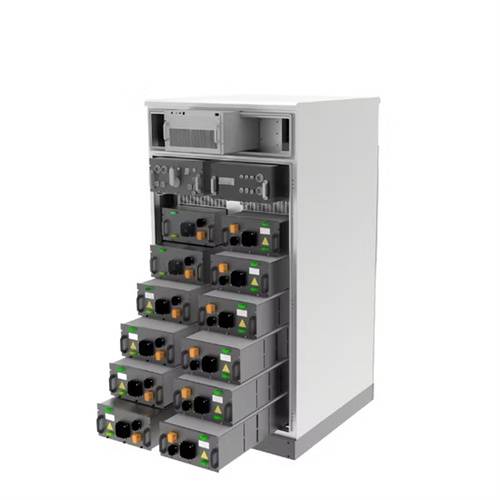
In the first half of 2023, China's new energy storage continued to develop at a high speed, with 850 projects (including planning, under construction and commissioned projects), more than twice that of the same period last year. The newly commissioned scale is 8.0GW/16.7GWh, higher than the new scale level last year (7.3GW/15.9GWh).
Contact online >>
An energy storage system is utilized in order to store energy during high electricity production periods and return it to consumption at low or very high wind speed periods. This system is characterized by energy storage capacity Ess, nominal input Nin and output power Nss of the entire energy storage system.
Contact online >>
A minimum spacing of 3 feet is required between ESS units unless 9540A testing allows for closer spacing. ESS location requirements are detailed for areas including garages, accessory structures, utility closets, and outdoors. ESS installed outdoors may not be within 3-feet of doors and windows.
Contact online >>
Like EV batteries, ESS battery systems are highly regulated and subject to stringent certification and testing requirements. The difference in regulation is evident in vehicle statistics. Worldwide, for the first half of 2023, EV FireSafe cites 500+ light electric vehicle (E-bike and E-scooter) battery fires, but only 44 passenger EV fires.
Contact online >>
Energy storage cabinets must incorporate comprehensive electrical safety measures such as proper insulation, grounding, and circuit protection devices like fuses or breakers. Detailed guidelines often specify the required distance between components, ensuring that low- and high-voltage areas are adequately segregated.
Contact online >>
Superconducting magnetic energy storage (SMES) systems in the created by the flow of in a coil that has been cooled to a temperature below its . This use of superconducting coils to store magnetic energy was invented by M. Ferrier in 1970. A typical SMES system includes three parts: superconducting , power conditioning system a.
Contact online >>
What are the risks of energy storage safety?1. UNDERSTANDING ENERGY STORAGE SYSTEMS . 2. CHEMICAL LEAKAGE HAZARDS . 3. FIRE AND EXPLOSION THREATS . 4. ENVIRONMENTAL IMPACT OF BATTERY DISPOSAL . 5. INSTALLATION AND MAINTENANCE RISKS . 6. REGULATORY COMPLIANCE CHALLENGES . 7. PREVENTIVE MEASURES AND BEST PRACTICES .
Contact online >>Enter your inquiry details, We will reply you in 24 hours.

