
Pumped storage hydropower (PSH) is a type of hydroelectric energy storage. It is a configuration of two water reservoirs at different elevations that can generate power as water moves down from one to the other (discharge), passing through a turbine. The system also requires power as it pumps water back into the upper reservoir (recharge).
Contact online >>
In 2009, world pumped storage generating capacity was 104 , while other sources claim 127 GW, which comprises the vast majority of all types of utility grade electric storage. The had 38.3 GW net capacity (36.8% of world capacity) out of a total of 140 GW of hydropower and representing 5% of total net electrical capacity in the EU. had 25.5 GW net capacity (24.5%.
Contact online >>
Pumped storage hydropower (PSH) is a type of hydroelectric energy storage. It is a configuration of two water reservoirs at different elevations that can generate power as water moves down from one to the other (discharge), passing through a turbine. The system also requires power as it pumps water back into the upper reservoir (recharge).
Contact online >>
Storage tank: Tank style water heaters are less expensive than tankless. We paid $570 (electric) and $600 (gas) for the two 50-gallon Rheem tank water heaters we tested, but we have seen tank water heaters priced for less at home improvement stores. Tanks with larger capacity or energy-efficiency upgrades cost more.
Contact online >>
When emergencies knock out other energy sources, water batteries can turn on fast to keep people safe and comfortable. Natural disasters are no match for hydropower and pumped storage’s flood control and irrigation benefits! Water batteries can save you from those, too—they help absorb that extra water and use it to power your home (or help .
Contact online >>
Thermal energy storage (TES) is the storage of for later reuse. Employing widely different technologies, it allows surplus thermal energy to be stored for hours, days, or months. Scale both of storage and use vary from small to large – from individual processes to district, town, or region. Usage examples are the balancing of energy demand between daytime and nighttime, storing s.
Contact online >>
During melting, energy goes exclusively to changing the phase of a substance; it does not go into changing the temperature of a substance. Hence melting is an isothermal process because a substance stays at the same temperature. Only when all of a substance is melted does any additional energy go to changing its temperature.
Contact online >>
Energy storage batteries that use water12:Scientists have developed a recyclable 'water battery' by replacing hazardous chemical electrolytes with water.These batteries are formally known as aqueous metal-ion batteries.Pumped storage hydropower, also known as water batteries, use two big pools of water, one high above the other, to provide power.
Contact online >>
The temperature change characteristics of the WS-PCM-TES in the charging process were obtained, and the thermal storage efficiency was analyzed. Combining with the engineering practice, this paper also put forward the way to optimize thermal storage performance of the phase change energy storage water tank. Previous.
Contact online >>
In 2009, world pumped storage generating capacity was 104 , while other sources claim 127 GW, which comprises the vast majority of all types of utility grade electric storage. The had 38.3 GW net capacity (36.8% of world capacity) out of a total of 140 GW of hydropower and representing 5% of total net electrical capacity in the EU. had 25.5 GW net capacity (24.5%.
Contact online >>
Today, the most advanced flow batteries are known as vanadium redox batteries (VRBs), which store charges in electrolytes that contain vanadium ions dissolved in a water-based solution. Vanadium's advantage is that its ions are stable and can be cycled through the battery over and over without undergoing unwanted side reactions.
Contact online >>
When discussing the chemical energy contained, there are different types which can be quantified depending on the intended purpose. One is the theoretical total amount of that can be derived from a system, at a given temperature and pressure imposed by the surroundings, called . Another is the theoretical amount of electrical energy that can be derived from This is an extended version of the energy density table from the main Energy density page:
Contact online >>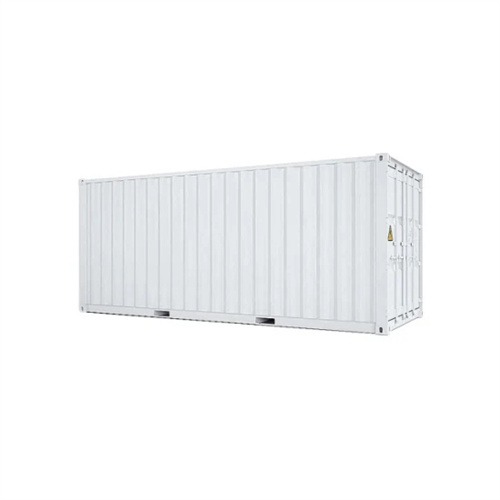
In 2009, world pumped storage generating capacity was 104 , while other sources claim 127 GW, which comprises the vast majority of all types of utility grade electric storage. The had 38.3 GW net capacity (36.8% of world capacity) out of a total of 140 GW of hydropower and representing 5% of total net electrical capacity in the EU. had 25.5 GW net capacity (24.5%.
Contact online >>
A SPHS plant consists of a high-head variation storage reservoir built in parallel to a major river. During periods of low-energy demand or high water availability, water is pumped into the reservoir. Stored water is released from the reservoir generating electricity when additional electricity generation capacity is required, or water is scarce.
Contact online >>
Hydropower – including pumped storage – is expected to remain the world’s largest source of renewable electricity generation, according to the International Energy Agency. It uses the motion of water to generate electricity and plays a "critical" role, the IEA says, in decarbonising the power system.
Contact online >>
In 2009, world pumped storage generating capacity was 104 , while other sources claim 127 GW, which comprises the vast majority of all types of utility grade electric storage. The had 38.3 GW net capacity (36.8% of world capacity) out of a total of 140 GW of hydropower and representing 5% of total net electrical capacity in the EU. had 25.5 GW net capacity (24.5%.
Contact online >>
Thermal energy storage (TES) is the storage of for later reuse. Employing widely different technologies, it allows surplus thermal energy to be stored for hours, days, or months. Scale both of storage and use vary from small to large – from individual processes to district, town, or region. Usage examples are the balancing of energy demand between daytime and nighttim.
Contact online >>
There are three kinds of TES systems, namely: 1) sensible heat storage that is based on storing thermal energy by heating or cooling a liquid or solid storage medium (e.g. water, sand, molten salts, rocks), with water being the cheapest option; 2) latent heat storage using phase change materials or PCMs (e.g. from a solid state into a liquid state); and 3) thermo-chemical storage (TCS) using chemical reac-tions to store and release thermal energy.
Contact online >>
Clean and quiet energy, optimal performance. The new ZenergiZe range from Atlas Copco takes modular energy storage to a new level. Developed with sustainability in mind, it helps operators dramatically reduce their fuel consumption and CO2 emissions, while delivering optimal performance with zero noise and virtually no maintenance.
Contact online >>
Water appears to be the best of sensible heat storage liquids for temperatures lower than 100 °C because of its availability, low cost, and the most important is its relatively high specific heat. For example, a 70 °C temperature change (20–90 °C), water will store 290 MJ/m3.
Contact online >>Enter your inquiry details, We will reply you in 24 hours.

