
To overcome the challenge of downtime in solar power generation, the Red Sea Project plans to integrate the world’s largest battery-based energy storage solution. This innovative facility is anticipated to have a storage capacity of 1,200 megawatt-hours (MWh), providing grid independence for the entire project.
Contact online >>
A minimum spacing of 3 feet is required between ESS units unless 9540A testing allows for closer spacing. ESS location requirements are detailed for areas including garages, accessory structures, utility closets, and outdoors. ESS installed outdoors may not be within 3-feet of doors and windows.
Contact online >>
The nation is wealthy in minerals such as lithium, a fundamental element in lithium-ion batteries – the predominant battery method used for energy retention. Furthermore, the country’s hilly landscape and various rivers present numerous chances for pumped hydro storage, a system that employs water to store and discharge energy.
Contact online >>
Access to solar panels has created capacity where the state falls short, but the overall energy security challenges facing the nation are daunting. This report, “North Korea’s Energy Sector,” is a compilation of articles published on 38 North in 2023 that surveyed North Korea’s energy production facilities and infrastructure.
Contact online >>
Energy storage facilities are monitored 24/7 by trained personnel prepared to maintain safety and respond to emergency events. Facilities use multiple strategies to maintain safety, including using established safety equipment and techniques to ensure that operation of the battery systems are conducted safely.
Contact online >>
In 2011, the physics Prof. Dr Horst Schmidt-Böcking [] () and Dr. Gerhard Luther () had the idea of a pump storage system that would be placed on the sea bed. This system would use the high water pressure at great water depths to store energy in hollow bodies. Shortly, after their idea was published on 1 April 2011 in the newspaper
Contact online >>
Superconducting magnetic energy storage (SMES) systems in the created by the flow of in a coil that has been cooled to a temperature below its . This use of superconducting coils to store magnetic energy was invented by M. Ferrier in 1970. A typical SMES system includes three parts: superconducting , power conditioning system a.
Contact online >>
A minimum spacing of 3 feet is required between ESS units unless 9540A testing allows for closer spacing. ESS location requirements are detailed for areas including garages, accessory structures, utility closets, and outdoors. ESS installed outdoors may not be within 3-feet of doors and windows.
Contact online >>
Pyeonghwa Motors ( : 평화자동차; : 平和自動車 – a word for ""), also spelled Pyonghwa, is one of the two car manufacturers and dealers in the , alongside . Until 2013, it was a joint venture in between Pyonghwa Motors of (), a company owned by 's , and the . The joint venture produced.
Contact online >>
Energy storage cabinets must incorporate comprehensive electrical safety measures such as proper insulation, grounding, and circuit protection devices like fuses or breakers. Detailed guidelines often specify the required distance between components, ensuring that low- and high-voltage areas are adequately segregated.
Contact online >>
What are the risks of energy storage safety?1. UNDERSTANDING ENERGY STORAGE SYSTEMS . 2. CHEMICAL LEAKAGE HAZARDS . 3. FIRE AND EXPLOSION THREATS . 4. ENVIRONMENTAL IMPACT OF BATTERY DISPOSAL . 5. INSTALLATION AND MAINTENANCE RISKS . 6. REGULATORY COMPLIANCE CHALLENGES . 7. PREVENTIVE MEASURES AND BEST PRACTICES .
Contact online >>
Guidance for an objective evaluation of lithium-based energy storage technologies by a potential user for any stationary application. To be used in conjunction with IEEE Std 1679-2010, IEEE Recommended Practice for the Characterization and Evaluation of Emerging Energy Storage Technologies in Stationary Applications.
Contact online >>
Energy storage has emerged as an integral component a resilient and efficient of electric grid, with a diverse array of applications. The widespread deployment of energy storage requires confidence across stakeholder groups (e.g., manufacturers, regulators, insurers, and consumers) in the safety and reliability of the technology.
Contact online >>
Like EV batteries, ESS battery systems are highly regulated and subject to stringent certification and testing requirements. The difference in regulation is evident in vehicle statistics. Worldwide, for the first half of 2023, EV FireSafe cites 500+ light electric vehicle (E-bike and E-scooter) battery fires, but only 44 passenger EV fires.
Contact online >>
Mitigation measures and best practices for battery systemsBuild awareness of battery safety . Ensure the proper design and manufacturing of battery systems . Install adequate ventilation . Implement thermal management . Physical isolation and separation . Implement a battery management system . Detection and isolation . Fire suppression and explosion protection . 更多项目
Contact online >>
Access to solar panels has created capacity where the state falls short, but the overall energy security challenges facing the nation are daunting. This report, “North Korea’s Energy Sector,” is a compilation of articles published on 38 North in 2023 that surveyed North Korea’s energy production facilities and infrastructure.
Contact online >>
The nation is wealthy in minerals such as lithium, a fundamental element in lithium-ion batteries – the predominant battery method used for energy retention. Furthermore, the country’s hilly landscape and various rivers present numerous chances for pumped hydro storage, a system that employs water to store and discharge energy.
Contact online >>
New analysis of business cases for grid-scale energy storage highlight opportunities to maximize multiple revenue streams and optimize projects. Market dynamics, technical developments and regulatory policies that could be decisive for energy storage deployment in Australia, Mainland China, Malaysia, Singapore, South Korea, Taiwan, Thailand and .
Contact online >>
Proper thermal management is essential to maintain performance, extend lifespan, and ensure safety. Overheating during charging and discharging can cause accelerated aging, capacity loss, and potentially dangerous thermal runaway events. Developing effective thermal management systems is critical to maximize LIBs' potential.
Contact online >>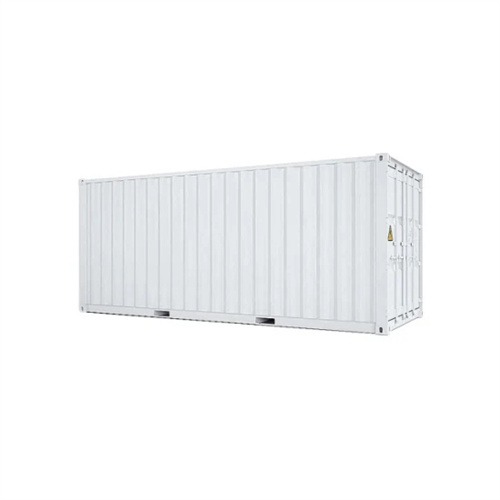
In the storing cycle, liquefied air is stored at low pressure in an insulated tank, which functions as the energy store. A cold box is used to cool compressed air using come-around air, and a cold storage tank can be filled with liquid-phase materials such as propane and methanol, as well as solid-phase materials such as pebbles and rocks.
Contact online >>Enter your inquiry details, We will reply you in 24 hours.

