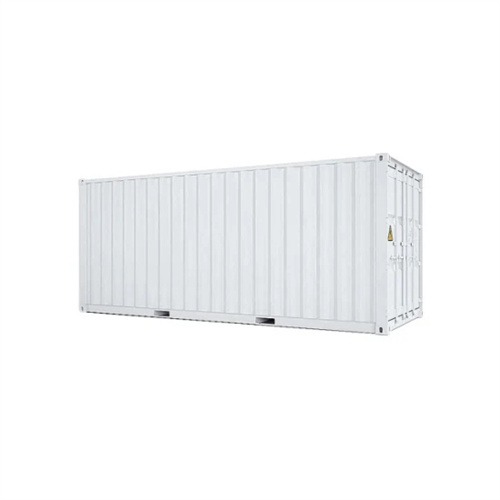
The economics of energy storage strictly depends on the reserve service requested, and several uncertainty factors affect the profitability of energy storage. Therefore, not every storage method is technically and economically suitable for the storage of several MWh, and the optimal size of the energy storage is market and location dependent. Moreover, ESS are affected by several risks, e.g.:
Contact online >>
To ensure the EU is prepared for the risk of an interruption of gas supplies next winter, the Commission has proposed an urgent regulation on gas storage, requiring Member States to: fill in at least 80 % of their storage capacity by 1 November 2022 (rising to 90 % in subsequent years); carry out the certification of all gas storage system operators; and provide a 100 % tariff discount on entry and exit points into gas storage.
Contact online >>
An Energy Storage System (ESS) is a technology that stores energy for later use. It can store energy generated from various sources, such as solar panels, wind turbines, or even the power grid itself. ESS can discharge this stored energy when needed, providing a consistent and reliable power supply.
Contact online >>
The top 5 companies shipping the most in 2023 remained CATL, BYD, EVE Energy, REPT BATTERO, and Hithium. CATL led with shipments exceeding 70 GWh. BYD and EVE Energy followed closely each with shipments of over 25 GWh, while REPT BATTERO and Hithium each ranked fourth and fifth with shipments of over 15 GWh.
Contact online >>
On 14 December 2023, the Council and Parliament reached a provisional agreement to reform the EU's Electricity Market Design (EMD), with the goal of reducing dependence on volatile fossil fuel prices. The text emphasises energy storage as a key solution in achieving energy security and decarbonisation.
Contact online >>Enter your inquiry details, We will reply you in 24 hours.

