
LAES is based on the concept that air at ambient pressure can be liquefied at −196 °C, reducing thus its specific volume of around 700 times, and can be stored in unpressurized vessels. During peak electricity time, the liquid air can be expanded in a generation system (e.g. turboexpander, reciprocating engine) to produce electric power.
Contact online >>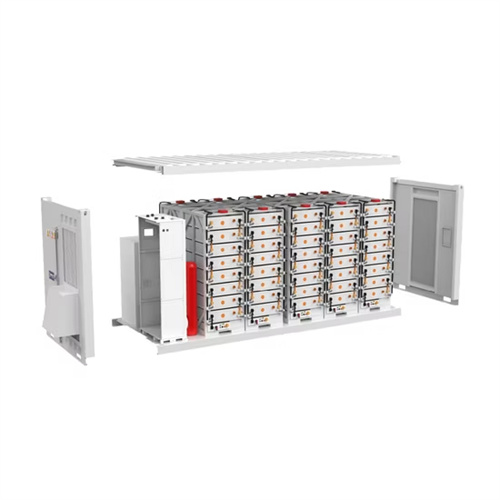
Liquid cooling is a technique that involves circulating a coolant, usually a mixture of water and glycol, through a system to dissipate heat generated during the operation of batteries. This is in stark contrast to air-cooled systems, which rely on the ambient and internally (within an enclosure) modified air to cool the battery cells.
Contact online >>
Liquid cooling is a technique that involves circulating a coolant, usually a mixture of water and glycol, through a system to dissipate heat generated during the operation of batteries. This is in stark contrast to air-cooled systems, which rely on the ambient and internally (within an enclosure) modified air to cool the battery cells.
Contact online >>
The utilization of nitrogen can effectively mitigate risks associated with reactive gases, which can compromise the safety and stability of energy storage systems. By replacing reactive components with nitrogen, the chemistry within devices like batteries and supercapacitors can be optimized to enhance performance while minimizing hazards.
Contact online >>
Lithium-ion batteries and related chemistries use a liquid electrolyte that shuttles charge around; solid-state batteries replace this liquid with ceramics or other solid materials. This swap unlocks possibilities that pack more energy into a smaller space, potentially improving the range of electric vehicles.
Contact online >>
Work has begun on a £300m energy plant which will store surplus electricity from wind and solar farms in the form of liquid air. The facility at Carrington near Manchester, designed by Highview Power, will create more than 700 jobs in the north-west of England, the firm said.
Contact online >>
Open vent valve completely, releasing any pressure built up inside the cylinder. Remove brass plug located on the top center of the cylinder. Insert funnel into hole. Pour liquid nitrogen into cylinder until level gauge reads 7/8 full or liquid nitrogen begins spitting from the vent valve. Reinsert brass plug and tighten.
Contact online >>
Liquid-cooled energy storage cabinets present several drawbacks that warrant attention. 1. High initial investment, 2. Maintenance complexity, 3. Risk of leakage, 4. Temperature sensitivity. High initial investment necessitates substantial upfront capital, often making them less accessible for small-scale applications.
Contact online >>
A hydraulic accumulator is a pressure vessel containing a membrane or piston that confines and compresses an inert gas (typically nitrogen). Hydraulic fluid is held on other side of the membrane. An accumulator in a hydraulic device stores hydraulic energy much like a car battery stores electrical energy.
Contact online >>
LAES is based on the concept that air at ambient pressure can be liquefied at −196 °C, reducing thus its specific volume of around 700 times, and can be stored in unpressurized vessels. During peak electricity time, the liquid air can be expanded in a generation system (e.g. turboexpander, reciprocating engine) to produce electric power.
Contact online >>
In liquid cooling energy storage systems, a liquid coolant circulates through a network of pipes, absorbing heat from the battery cells and dissipating it through a radiator or heat exchanger. This method is significantly more effective than air cooling, especially for large-scale storage applications.
Contact online >>
Phase change materials (PCMs) having a large latent heat during solid-liquid phase transition are promising for thermal energy storage applications. However, the relatively low thermal conductivity of the majority of promising PCMs (<10 W/(m ⋅ K)) limits the power density and overall storage efficiency.
Contact online >>
When it is cheaper (usually at night), electricity is used to cool air from the atmosphere to -195 °C using the to the point where it liquefies. The liquid air, which takes up one-thousandth of the volume of the gas, can be kept for a long time in a large at . At times of , the liquid air is pumped at high pressure into a
Contact online >>
The working principle of the nitrogen storage tank is relatively simple, but the underlying design is crucial. It receives nitrogen from the nitrogen generator and stores it at a certain pressure. The gas is stored within the tank and, when needed, is gradually released, maintaining stable airflow within the system.
Contact online >>
As a vanadium flow battery, the new energy storage system differs from the common lithium-ion batteries in use in today's electric vehicles and smartphones. They use massive tanks to store chemical energy in the form of liquid electrolytes, which can be converted into electricity by passing the fluid through a special membrane.
Contact online >>
Active water cooling is the best thermal management method to improve battery pack performance. It is because liquid cooling enables cells to have a more uniform temperature throughout the system whilst using less input energy, stopping overheating, maintaining safety, minimising degradation and alowing higher performance.
Contact online >>
The product of hydrogen combustion in a pure oxygen environment is solely water vapor. However, the high combustion temperatures and present atmospheric nitrogen can result in the breaking of N≡N bonds, forming toxic NOx if no exhaust scrubbing is done. Since water is often considered harmless to the environment, an engine burning it can be considered "zero emissions". In aviation, however, water vapor emitted in the atmosphere contributes to
Contact online >>
A liquid air energy storage system (LAES) provides an economical, long-term storage solution for excess and off-peak energy1. It offers advantages such as high volumetric energy density, low storage losses, and no geographical constraints2. LAES plants can provide large-scale, long-term energy storage with hundreds of megawatts of output1.
Contact online >>
On 28th August 1992, there was a catastrophic failure of a storage tank containing liquefied nitrogen. The failure resulted in the collapse of almost half of the manufacturing site and damage to houses and vehicles within a 400 metre radius. Fragments of the vessel were projected up to 350 metres, the largest of. . John Bond, 'The rupture of a liquid nitrogen storage tank', Loss Prevention Bulletin No. 123, Institution of Chemical Engineers.
Contact online >>
LAES is based on the concept that air at ambient pressure can be liquefied at −196 °C, reducing thus its specific volume of around 700 times, and can be stored in unpressurized vessels. During peak electricity time, the liquid air can be expanded in a generation system (e.g. turboexpander, reciprocating engine) to produce electric power.
Contact online >>Enter your inquiry details, We will reply you in 24 hours.

