
Here are some common options:Air freight: Air freight is often the fastest method for shipping batteries internationally. . Ocean freight: Ocean freight is a cost-effective method for shipping batteries in large quantities. . Courier services: Courier services offer door-to-door delivery and can handle battery shipments. .
Contact online >>
You can ship lithium batteries via USPS, but there are some restrictions and requirements12. There are six types of lithium batteries eligible for shipment, and you need to use the new lithium battery marks that became mandatory this year1. The electronic device must be shipped with a battery for customs verification, and you should follow the USPS guidelines for packing and labeling lithium batteries2.
Contact online >>
A typical lithium-ion battery can store 150 watt-hours of electricity in 1 kilogram of battery. A NiMH (nickel-metal hydride) battery pack can store perhaps 100 watt-hours per kilogram, although 60 to 70 watt-hours might be more typical. A lead-acid battery can store only 25 watt-hours per kilogram.
Contact online >>
The average lifespan of a motorcycle battery depends on the type: 2 to 5 years for lead-acid models and 5 to 10 years for lithium-ion types1. Specifically, a lithium motorcycle battery can last up to 8 years under optimal conditions2, while AGM batteries typically last about 3 to 5 years2. However, lithium-ion batteries generally last about two to three years or 300 to 500 charge cycles3.
Contact online >>
To test a lithium battery with a multimeter, follow these steps12:Set the multimeter to measure DC voltage.Connect the multimeter probes to the positive and negative terminals of the lithium-ion battery.Check the voltage reading. A fully charged battery should read around 4.2V. A significantly lower reading may indicate a discharged or damaged battery.
Contact online >>
Spare (uninstalled) lithium ion and lithium metal batteries, including power banks and cell phone battery charging cases, must be carried in carry-on baggage only. With airline approval, passengers may also carry up to two spare larger lithium ion batteries (101–160 Wh) or lithium metal batteries (2-8 grams).
Contact online >>
In 2010, global lithium-ion battery production capacity was 20 gigawatt-hours. By 2016, it was 28 GWh, with 16.4 GWh in China. Global production capacity was 767 GWh in 2020, with China accounting for 75%1. In 2020, slightly above 0.41 million metric tons of LCE were produced; in 2021, production exceeded 0.54 million metric tons (a 32 percent year-on-year increase)2.
Contact online >>
A lithium polymer battery, or more correctly, lithium-ion polymer battery (abbreviated as LiPo, LIP, Li-poly, lithium-poly, and others), is a of technology using a instead of a liquid electrolyte. Highly conductive semisolid () polymers form this electrolyte. These batteries provide higher than other lithium battery types..
Contact online >>
Lithium-ion batteries have environmental impacts, including1234:Containing toxic metals like cobalt, nickel, and manganese, which can contaminate water supplies and ecosystems.Fires in landfills or battery-recycling facilities due to inappropriate disposal.Higher carbon dioxide emissions during production compared to gasoline-powered cars.Habitat destruction, water contamination, and significant carbon emissions during raw material extraction and processing.
Contact online >>
TSA regulations for lithium-ion batteries12345:Batteries up to 100 watt-hours (or 27027.03 mAh) are generally permitted in carry-on baggage.Most batteries allowed in your carry-on can also be brought in your checked baggage.Spare lithium batteries are allowed in your carry-on bags.Devices containing lithium metal or lithium-ion batteries must be carried in carry-on baggage.Recharging of the devices and/or the batteries on board the aircraft is not permitted.
Contact online >>
If you want a 24V battery pack, you can connect six 18650 cells in series. To calculate the capacity, you need to multiply the capacity of one cell by the number of cells in parallel. For example, if you use four cells in parallel and each cell has a capacity of 2500mAh, your battery pack will have a capacity of 10,000mAh.
Contact online >>
In the 1990s, the United States was the World’s largest miner of lithium minerals, contributing to 1/3 of the total production. By 2010 replaced the USA the leading miner, thanks to the development of lithium brines in . By 2024, and joined Chile as the top 3 miners. Li-ion battery production is also heavily concentrated, with 60% coming from China i.
Contact online >>
The typical estimated life of a Lithium-Ion battery is about two to three years or 300 to 500 charge cycles, whichever occurs first. One charge cycle is a period of use from fully charged, to fully discharged, and fully recharged again. Use a two to three year life expectancy for batteries that do not run through complete charge cycles.
Contact online >>
Non-rechargeable lithium batteries should not be recharged123. Attempting to recharge them can result in serious risks to your health and the environment12. Though it is possible to recharge non-rechargeable batteries using various methods, it is not recommended and can only be done at the owner’s risk4. While one source claims that non-rechargeable lithium batteries can be charged, it is not advised due to the high sensitivity of lithiums to heat5.
Contact online >>
How Much of a Lithium-Ion Battery Can Be Recycled? While not every part of a lithium-ion battery is recoverable, most of the materials can be recycled. Over 90% of metals like cobalt and nickel can be reclaimed, though certain components, such as plastics and organic chemicals, are harder to recycle.
Contact online >>
Electric cars primarily use lithium-ion batteries, which are known for their high energy density, efficient charge/discharge cycles, and longer lifespan1234. These batteries are similar to those found in smartphones and laptops12. While lithium-ion batteries are the most popular, other battery types are also used in electric vehicles5.
Contact online >>
This provision authorizes packages with equipment containing no more than 2 batteries or 4 cells to be offered for transport without the lithium battery handling label. For example, a package containing a notebook computer may have 1 lithium ion battery and 2 small lithium metal coin cells installed in the product.
Contact online >>
Zimbabwe does not have a lithium battery and EV industry, and is an insignificant player as a market for EVs1. However, Chinese steel manufacturer Dinson Iron and Steel Company (DISCO) plans to locally produce lithium-ion batteries in Zimbabwe, as the country has all the raw materials required in the production process. The company expects to produce two million tonnes of lithium concentrate per year to support the battery manufacturing plant2.
Contact online >>
Lithium car batteries, which are the main batteries used in electric vehicles, are recyclable12. However, they are not as easily recycled as lead-acid batteries, which are more common in conventional cars2. The life cycle of lithium car batteries is estimated to be around 10 to 20 years1. Recycling lithium car batteries can help reduce the need for mining new raw materials2.
Contact online >>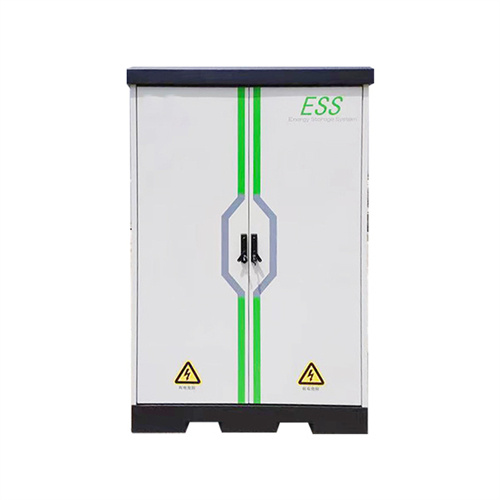
Is grid-scale battery storage needed for renewable energy integration? Battery storage is one of several technology options that can enhance power system flexibility and enable high levels of renewable energy integration. Studies and real-world experience have demonstrated that interconnected power systems can safely and reliably integrate high
Contact online >>Enter your inquiry details, We will reply you in 24 hours.

