
Project features 5 units of HyperStrong's liquid-cooling outdoor cabinets in a 500kW/1164.8kWh energy storage power station. The "all-in-one" design integrates batteries, BMS, liquid cooling system, heat management system, fire protection system, and modular PCS into a safe, efficient, and flexible energy storage system.
Contact online >>
Compressed-air-energy storage (CAES) is a way to for later use using . At a scale, energy generated during periods of low demand can be released during periods. The first utility-scale CAES project was in the Huntorf power plant in , and is still operational as of 2024 . The Huntorf plant was initially developed as a load balancer for
Contact online >>
Compressed-air-energy storage (CAES) is a way to for later use using . At a scale, energy generated during periods of low demand can be released during periods. The first utility-scale CAES project was in the Huntorf power plant in , and is still operational as of 2024 . The Huntorf plant was initially developed as a load balancer for
Contact online >>
Compressed-air-energy storage (CAES) is a way to for later use using . At a scale, energy generated during periods of low demand can be released during periods. The first utility-scale CAES project was in the Huntorf power plant in , and is still operational as of 2024 . The Huntorf plant was initially developed as a load balancer for
Contact online >>
Ice storage air conditioning is the process of using ice for . The process can reduce energy used for cooling during times of . Alternative power sources such as solar can also use the technology to store energy for later use. This is practical because of water's large : one of water (one cubic metre) can store 334 (MJ.
Contact online >>
Compressed-air-energy storage (CAES) is a way to for later use using . At a scale, energy generated during periods of low demand can be released during periods. The first utility-scale CAES project was in the Huntorf power plant in , and is still operational as of 2024 . The Huntorf plant was initially developed as a load balancer for
Contact online >>
Compressed-air-energy storage (CAES) is a way to for later use using . At a scale, energy generated during periods of low demand can be released during periods. The first utility-scale CAES project was in the Huntorf power plant in , and is still operational as of 2024 . The Huntorf plant was initially developed as a load balancer for
Contact online >>
During peak demand hours, air conditioners can account for over half the total demand on the grid in some parts of the world today. New cooling technologies that incorporate energy storage could help by charging themselves when renewable electricity is available and demand is low, and still providing cooling services when the grid is stressed.
Contact online >>
An electric motor provides power to all-electric cars’ AC and heat systems. Similar to how a kitchen refrigerator works. The energy storage source provides sufficient power for the AC system. The chilled air passes through the vents from the ESS positioned at the back to the front-positioned AC system.
Contact online >>
Compression of air creates heat; the air is warmer after compression. Expansion removes heat. If no extra heat is added, the air will be much colder after expansion. If the heat generated during compression can be stored and used during expansion, then the efficiency of the storage improves considerably. There are several ways in which a CAES system can deal with heat. Air storage can be , diabatic, , or near-isothermal.
Contact online >>
As a mechanical energy storage system, CAES has demonstrated its clear potential amongst all energy storage systems in terms of clean storage medium, high lifetime scalability, low self-discharge, long discharge times, relatively low capital costs, and high durability.
Contact online >>
Compressed-air-energy storage (CAES) is a way to for later use using . At a scale, energy generated during periods of low demand can be released during periods. The first utility-scale CAES project was in the Huntorf power plant in , and is still operational as of 2024 . The Huntorf plant was initially developed as a load balancer for
Contact online >>
engines compress and heat air with a fuel suitable for an . For example, burning natural gas or heats compressed air, and then a conventional engine or the rear portion of a expands it to produce work. can recharge an . The apparently-defunct This storage system uses a chamber with specific boundaries to store large amounts of air. This means from a thermodynamic point of view that this system is a constant-volume and variable-pressure system.
Contact online >>
The primary role of an air receiver tank is to provide temporary storage for compressed air. Storing compressed air allows the system to average the peaks in compressed air demand over the course of a shift. You can think of your air receiver tank like a battery for your compressed air system, except it is storing air instead of chemical energy.
Contact online >>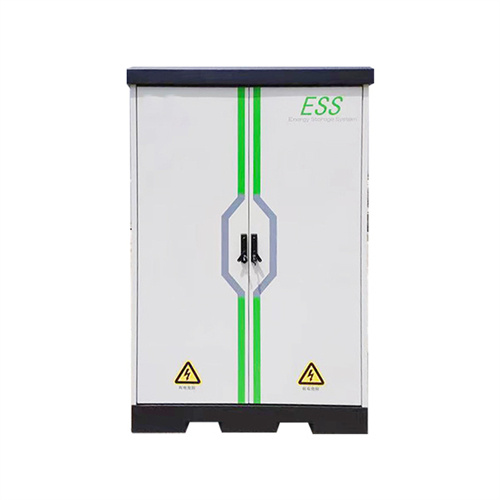
Corrosive storage cabinets shall be ventilated at a rate of approximately 2 CFM exhaust per square foot of cabinet footprint. Do not duct into the fume hood bench top. Instead run a separate exhaust from the cabinet up to the exhaust duct. Connect cabinet exhausts to constant volume (CV) venturi style TAUs.
Contact online >>
In order to achieve a near- so that most of the energy is saved in the system and can be retrieved, and losses are kept negligible, a near-reversible or an is desired. In an compression process, the gas in the system is kept at a constant temperature throughout. This necessarily requires an exchange of heat with the gas; otherwise, the temperat.
Contact online >>
Compressed-air-energy storage (CAES) is a way to for later use using . At a scale, energy generated during periods of low demand can be released during periods. The first utility-scale CAES project was in the Huntorf power plant in , and is still operational as of 2024 . The Huntorf plant was initially developed as a load balancer for
Contact online >>
Compressed-air-energy storage (CAES) is a way to for later use using . At a scale, energy generated during periods of low demand can be released during periods. The first utility-scale CAES project was in the Huntorf power plant in , and is still operational as of 2024 . The Huntorf plant was initially developed as a load balancer for
Contact online >>
LAES is based on the concept that air at ambient pressure can be liquefied at −196 °C, reducing thus its specific volume of around 700 times, and can be stored in unpressurized vessels. During peak electricity time, the liquid air can be expanded in a generation system (e.g. turboexpander, reciprocating engine) to produce electric power.
Contact online >>
Compression of air creates heat; the air is warmer after compression. Expansion removes heat. If no extra heat is added, the air will be much colder after expansion. If the heat generated during compression can be stored and used during expansion, then the efficiency of the storage improves considerably. There are several ways in which a CAES system can deal with heat. Air storage can be , diabatic, , or near-isothermal.
Contact online >>Enter your inquiry details, We will reply you in 24 hours.

