
A hydraulic accumulator is a storage reservoir in which an is held under pressure that is applied by an external . The external source can be an engine, a , a raised , or a compressed . An accumulator enables a hydraulic system to cope with extremes of demand using a less powerful pump, to respond more quickly to a temporary demand, and to smooth out pulsations. It is a type of
Contact online >>
A hydraulic accumulator is a storage reservoir in which an is held under pressure that is applied by an external . The external source can be an engine, a , a raised , or a compressed . An accumulator enables a hydraulic system to cope with extremes of demand using a less powerful pump, to respond more quickly to a temporary demand, and to smooth out pulsations. It is a type of
Contact online >>
A hydraulic accumulator is a storage reservoir in which an is held under pressure that is applied by an external . The external source can be an engine, a , a raised , or a compressed . An accumulator enables a hydraulic system to cope with extremes of demand using a less powerful pump, to respond more quickly to a temporary demand, and to smooth out pulsations. It is a type of
Contact online >>
When the fluid is pumped into an accumulator the nitrogen (N2) inside the accumulator is compressed. When all the hydraulic fluid is in an accumulator designed for high pressure side of an HHV, the pressure of the nitrogen reaches 5000 pounds per square inch (psi). If empty of fluid, the pressure of the nitrogen is about 2000 psi.
Contact online >>
A hydraulic accumulator is a storage reservoir in which an is held under pressure that is applied by an external . The external source can be an engine, a , a raised , or a compressed . An accumulator enables a hydraulic system to cope with extremes of demand using a less powerful pump, to respond more quickly to a temporary demand, and to smooth out pulsations. It is a type of
Contact online >>
A hydraulic accumulator is a storage reservoir in which an is held under pressure that is applied by an external . The external source can be an engine, a , a raised , or a compressed . An accumulator enables a hydraulic system to cope with extremes of demand using a less powerful pump, to respond more quickly to a temporary demand, and to smooth out pulsations. It is a type of
Contact online >>
A servo hydraulic system accumulator has the following functions12:Supplementing pump flow: It stores potential energy during idle periods and transfers it back to the system during peak power demands.Separating hydraulic fluid from compressed gas: Typically, a bladder inside the accumulator prevents mixing of hydraulic fluid and compressed gas.
Contact online >>
A hydraulic accumulator is a storage reservoir in which an is held under pressure that is applied by an external . The external source can be an engine, a , a raised , or a compressed . An accumulator enables a hydraulic system to cope with extremes of demand using a less powerful pump, to respond more quickly to a temporary demand, and to smooth out pulsations. It is a type of
Contact online >>
A hydraulic accumulator is a storage reservoir in which an is held under pressure that is applied by an external . The external source can be an engine, a , a raised , or a compressed . An accumulator enables a hydraulic system to cope with extremes of demand using a less powerful pump, to respond more quickly to a temporary demand, and to smooth out pulsations. It is a type of
Contact online >>
A step-by-step guide to installing a hydraulic accumulator in your system – everything you need to knowStep 1: Prepare the Necessary Tools Before you set up the hydraulic accumulator, you will need to ensure you have the necessary tools on hand. Here is a list of tools you will need to install, mount, and set up the hydraulic accumulator: . Step 2: Choose the Location for Installation . Step 3: Inspect the Hydraulic System
Contact online >>
Accumulators come in many different sizes and designs to store hydraulic fluid under pressure. Its initial gas pressure is called the “precharge pressure.” When the system pressure exceeds the precharge pressure, the nitrogen gas is squeezed, compresses and decreases in volume, letting hydraulic fluid into the accumulator.
Contact online >>
A- Secure the accumulator on the table, remove the bleed plug. Using a spanner wrench (included in our accumulator service kit RMK-100), remove the lock nut and spacer from the top adapter. B- Remove the gas valve guard and jam nut from the bladder stem. C- Push the top adapter with bladder inside the shell.
Contact online >>
Accumulator pressure is the hydraulic energy stored in an accumulator, which can be released when needed in various machine systems. The functioning of the accumulator allows energy to be stored during low-demand phases and released during peak demand, thus ensuring a consistent performance throughout operations.
Contact online >>
This page lists the main power stations in Guinea contributing to the public power supply. There are also a number of private power plants supplying specific industrial users such as mines and refineries. Guinea is considered to have considerable renewable energy potential. Schemes at an advanced state of. . A solar facility is proposed at Khoumagueli with 40MW of capacity. . • • . • • • • •
Contact online >>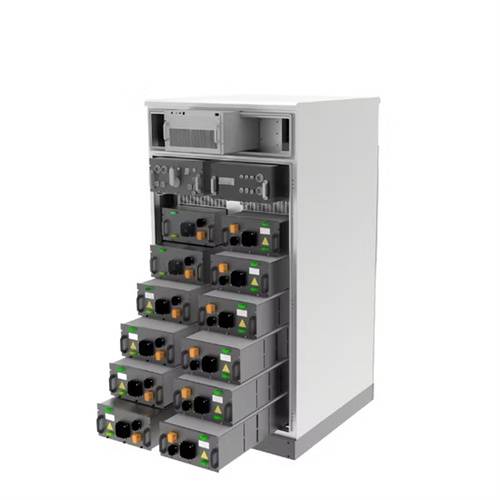
ENERGY STORAGE. SAET builds electrochemical storage systems, whether standalone or associated to other plants (renewables, industrial, etc.). It operates as an EPC Contractor for the supply of turnkey systems or as a system integrator in collaboration with the most important international battery manufacturers.
Contact online >>
Accumulators are used on (FOT)fixed orifice tube systems. They collect the excess liquid that may leave the evaporator's outlet tube. Compressors are incapable of compressing liquid. The accumulator allows only a fixed amount of oil and liquid refrigerant to enter the compressor for lubrication and cooling.
Contact online >>
The economics of energy storage strictly depends on the reserve service requested, and several uncertainty factors affect the profitability of energy storage. Therefore, not every storage method is technically and economically suitable for the storage of several MWh, and the optimal size of the energy storage is market and location dependent. Moreover, ESS are affected by several risks, e.g.:
Contact online >>
You have four options for siting ESS in a residential setting: an enclosed utility closet, basement, storage or utility space within a dwelling unit with finished or noncombustible walls or ceilings; inside a garage or accessory structure; on the exterior wall of the home; and on ground mounts.
Contact online >>
A hydraulic accumulator is a pressure vessel containing a membrane or piston that confines and compresses an inert gas (typically nitrogen). Hydraulic fluid is held on other side of the membrane. An accumulator in a hydraulic device stores hydraulic energy much like a car battery stores electrical energy.
Contact online >>
Pumped storage plants can operate with seawater, although there are additional challenges compared to using fresh water, such as saltwater corrosion and barnacle growth. Inaugurated in 1966, the 240 MW in France can partially work as a pumped-storage station. When high tides occur at off-peak hours, the turbines can be used to pump more seawater into the reservoir than the high tide would have naturally brought in. It is the only larg.
Contact online >>Enter your inquiry details, We will reply you in 24 hours.

