
The Solar System formed at least 4.568 billion years ago from the gravitational collapse of a region within a large . This initial cloud was likely several light-years across and probably birthed several stars. As is typical of molecular clouds, this one consisted mostly of hydrogen, with some helium, and small amounts of heavier elements by previous generations of stars.
Contact online >>
The Sun is the Solar System's star and by far its most massive component. Its large mass (332,900 ), which comprises 99.86% of all the mass in the Solar System, produces temperatures and densities in its high enough to sustain nuclear fusion of hydrogen into helium. This releases an enormous amount of , mostly into as peaking in .
Contact online >>
Earth is the third planet from the Sun1. It is the only world in our solar system with liquid water on the surface1. Our solar system consists of the Sun, eight planets, asteroids, and comets2. Earth is the biggest of the terrestrial planets and the fifth largest planet in our solar system3.
Contact online >>
You have four options for siting ESS in a residential setting: an enclosed utility closet, basement, storage or utility space within a dwelling unit with finished or noncombustible walls or ceilings; inside a garage or accessory structure; on the exterior wall of the home; and on ground mounts.
Contact online >>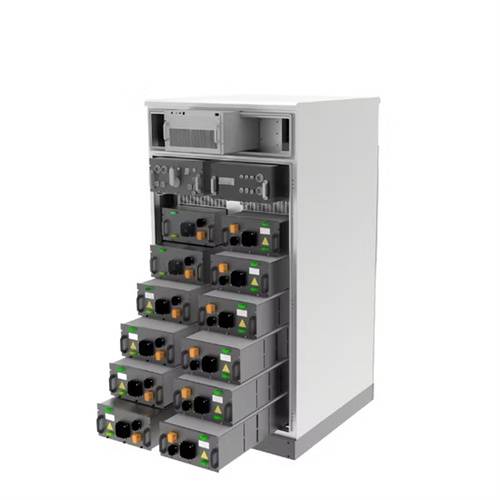
ENERGY STORAGE. SAET builds electrochemical storage systems, whether standalone or associated to other plants (renewables, industrial, etc.). It operates as an EPC Contractor for the supply of turnkey systems or as a system integrator in collaboration with the most important international battery manufacturers.
Contact online >>
This page lists the main power stations in Guinea contributing to the public power supply. There are also a number of private power plants supplying specific industrial users such as mines and refineries. Guinea is considered to have considerable renewable energy potential. Schemes at an advanced state of. . A solar facility is proposed at Khoumagueli with 40MW of capacity. . • • . • • • • •
Contact online >>
The economics of energy storage strictly depends on the reserve service requested, and several uncertainty factors affect the profitability of energy storage. Therefore, not every storage method is technically and economically suitable for the storage of several MWh, and the optimal size of the energy storage is market and location dependent. Moreover, ESS are affected by several risks, e.g.:
Contact online >>Enter your inquiry details, We will reply you in 24 hours.

