
The Solar System formed at least 4.568 billion years ago from the gravitational collapse of a region within a large . This initial cloud was likely several light-years across and probably birthed several stars. As is typical of molecular clouds, this one consisted mostly of hydrogen, with some helium, and small amounts of heavier elements by previous generations of stars.
Contact online >>
Earth is the third planet from the Sun1. It is the only world in our solar system with liquid water on the surface1. Our solar system consists of the Sun, eight planets, asteroids, and comets2. Earth is the biggest of the terrestrial planets and the fifth largest planet in our solar system3.
Contact online >>
The Solar System formed at least 4.568 billion years ago from the gravitational collapse of a region within a large . This initial cloud was likely several light-years across and probably birthed several stars. As is typical of molecular clouds, this one consisted mostly of hydrogen, with some helium, and small amounts of heavier elements by previous generations of stars.
Contact online >>
The Sun is the Solar System's star and by far its most massive component. Its large mass (332,900 ), which comprises 99.86% of all the mass in the Solar System, produces temperatures and densities in its high enough to sustain nuclear fusion of hydrogen into helium. This releases an enormous amount of , mostly into as peaking in .
Contact online >>
According to data from the , accounted for 8.4% of total primary energy production and 21% of total utility-scale electricity generation in the United States in 2022. Since 2019, has been the largest producer of renewable electricity in the country. Wind power generated 434 of electricity in 2022, w.
Contact online >>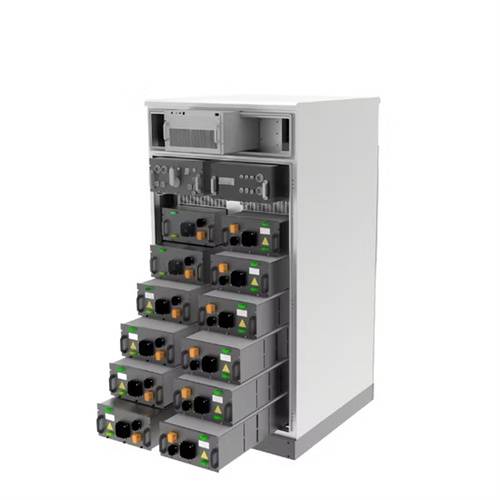
Generally, the negative electrode of a conventional lithium-ion cell is made from . The positive electrode is typically a metal or phosphate. The is a in an . The negative electrode (which is the when the cell is discharging) and the positive electrode (which is the when discharging) are prevented from shorting by a separator. The el.
Contact online >>
The battery life of energy storage depends on the storage duration and usage cycles123:Storage duration: Most commercially deployed battery energy storage systems have storage durations of two to four hours2.Battery lifespan: Batteries can last anywhere between 5-15 years, with replacement likely needed during the 20-30 year life of a solar system3.
Contact online >>
The IRS has published guidelines that list the useful life of solar panels as 20 years. Once you have the cost and useful life, you can calculate the depreciation using a standard formula. The depreciation of solar panels can be a valuable tax deduction for homeowners who install them on their property.
Contact online >>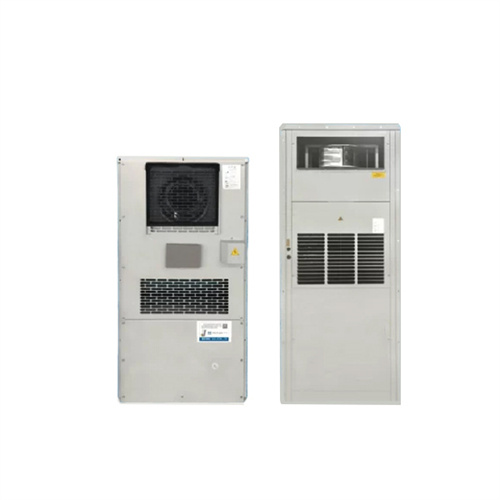
A code repository is necessary to increase awareness and improve safety in the energy storage industry. Electrochemical energy storage has a reputation for concerns regarding the ventilation of hazardous gases, poor reliability, short product life, substantial cooling requirements, and high levels of periodic maintenance.
Contact online >>
As renewable power and energy storage industries work to optimize utilization and lifecycle value of battery energy storage, life predictive modeling becomes increasingly important. Typically, end-of-life (EOL) is defined when the battery degrades to a point where only 70-80% of beginning-of-life (BOL) capacity is remaining under nameplate
Contact online >>Enter your inquiry details, We will reply you in 24 hours.

