
CAIRO - 3 December 2023: Norway's Scatec and the Egyptian Electricity Holding Company (EEHC) have signed a cooperation agreement for the first a solar and battery storage project in Egypt. The project envisions the development of a 1-gigawatt (GW) solar plant and a 200 megawatt-hour (MWh) battery storage facility.
Contact online >>
The newly-launched hydrogen energy development project, led by China Southern Power Grid (CSG), is expected to solve the technical bottleneck of storing hydrogen in solid form under normal temperature conditions. It is based on the principle of chemical reaction between hydrogen and a new-type of alloy material.
Contact online >>
Energy storage serves important grid functions, including time-shifting energy across hours, days, weeks, or months; regulating grid frequency; and ensuring flexibility to balance supply and demand. Energy storage is particularly important in an increasingly electrified world where demand is rising and supply is shifting toward variable .
Contact online >>
Project Specific Requirements: Elements for developing energy storage specific project requirements include ownership of the storage asset, energy storage system (ESS) performance, communication and control system requirements, site requirements and availability, local constraints, and safety requirements.
Contact online >>
Recently, 66 sets of Sungrow's energy storage system, PowerTitan 2.0, arrived in the UK, demonstrating its acceleration of energy storage deployment in Europe. In the Middle East, over 1,500 sets of PowerTitan 2.0 are set for deployment, contributing to one of the world’s largest energy storage projects with a capacity of 7.8 GWh.
Contact online >>
Tampere University, Finland, along with its partners from six European countries, is working to revolutionise the field of electrochemical energy storage. The EU funded ARMS-project aims to enhance the energy density of supercapacitors, devices used for energy storage, without sacrificing their eco-friendliness.
Contact online >>
Northern Lights is the first project in the world allowing industrial companies to transport and sequester their CO2 emissions. The project is owned in equal shares by TotalEnergies, Equinor and Shell. Operational since September 2024, the Phase 1 installations can store to 1.5 million tons of CO2 per year.
Contact online >>
The “2.5MWp PV + 1.5MW/2.5MWh E Storage System+ 3MW Diesel Generating” off-grid microgrid solution for Camp B9, Iraq, provided by Kehua, has been successfully implemented. It is also the first benchmark project of Iraq’s Ministry of Oil and Ministry of Electricity. This photovoltaic storage power plant is the first in Iraq.
Contact online >>
The new energy storage capacity is expected to allow the utility to reduce renewable energy curtailments by 69%. It is also expected to enable 10% more new utility-scale renewables on the grid than previous models allowed. Hawaiian Electric said it expects the battery to save its customers on electricity bills.
Contact online >>
Energy storage serves important grid functions, including time-shifting energy across hours, days, weeks, or months; regulating grid frequency; and ensuring flexibility to balance supply and demand. Energy storage is particularly important in an increasingly electrified world where demand is rising and supply is shifting toward variable .
Contact online >>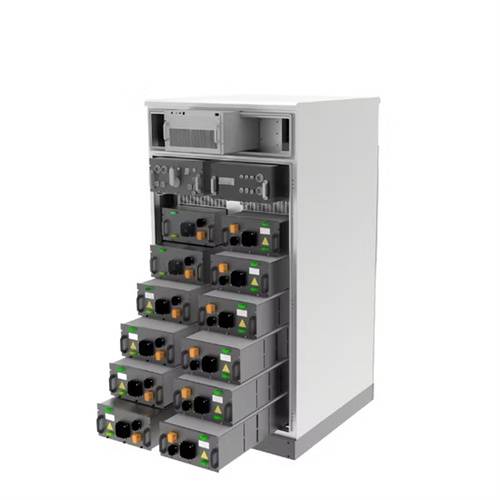
In 2019, China's physical energy storage technology made important breakthroughs. The world’s first 10 MW advanced compressed air energy storage project passed acceptance by the Ministry of Science and Technology, and the world’s first 100 MW advanced compressed air energy storage project officially began construction in Zhangjiakou.
Contact online >>
In the first half of 2023, China's new energy storage continued to develop at a high speed, with 850 projects (including planning, under construction and commissioned projects), more than twice that of the same period last year. The newly commissioned scale is 8.0GW/16.7GWh, higher than the new scale level last year (7.3GW/15.9GWh).
Contact online >>
The country’s energy storage plans, while still in the early stages, may offer some hope for the future. A 20 MW/50 MWh Battery Energy Storage System (BESS) has been planned for 2025, with expansions planned for 2026-2028. If successful, these projects could help mitigate the intermittent nature of RE.
Contact online >>
Evecon and Corsica Sole are joining forces in the Baltic Storage Platform joint venture to build and operate high-capacity battery storage power plants connected to the electricity transmission grid. The plants will be built at two locations and are scheduled to be commissioned in the course of 2025.
Contact online >>
In order to address the challenges in the metropolitan region, the energy company Stockholm Exergi and the power operator Polar Capacity are joining forces to build large-scale battery parks with a combined capacity of at least 100 MW. The first facility, with a capacity of 20 MW, is set to be completed by 2023.
Contact online >>
Europe and China are leading the installation of new pumped storage capacity – fuelled by the motion of water.Batteries are now being built at grid-scale in countries including the US, Australia and Germany.Thermal energy storage is predicted to triple in size by 2030.Mechanical energy storage harnesses motion or gravity to store electricity.
Contact online >>
Polish state-owned power company PGE Group (WSE:PGE) is planning to build a battery energy storage system (BESS) of at least 200 MW/820MWh which will be linked to an existing pumped-storage power plant in the north of Poland. The project has obtained the first license promise in Poland for electricity storage, PGE said in a press release.
Contact online >>
Morocco’s large-scale hydrogen project aims to electrolyze desalinated seawater and turn it into 200,000 tons of green ammonia annually for the European market. Through this, they are able to produce green hydrogen. Additionally, the project intends to construct 1GW of onshore and wind capacity.
Contact online >>
A vanadium redox flow battery with a 24-hour discharge duration will be built and tested in a project launched by Pacific Northwest National Laboratory (PNNL) and technology provider Invinity Energy Systems. The vanadium redox flow battery (VRFB) will be installed at PNNL’s Richland Campus in Washington state, US.
Contact online >>
IRR measures the return on investment for energy storage projects and represents the average annual rate of return, resulting in a net present value of zero. It helps assess the profitability and payback period of a project to determine its economic feasibility. A higher IRR indicates a shorter payback period.
Contact online >>Enter your inquiry details, We will reply you in 24 hours.

